Lübbecke
The Mansbach Family
Table of contents
Lübbecke
The Mansbach Family
Many Jewish families traded in textiles and manufactured goods, ran butcher shops, were livestock dealers, or worked as sales representatives. Here we find the family graves of the Mansbach butcher shop, the Rosenberg textile store, and the Hurwitz butcher shop.
Butcher Julius Mansbach had originally purchased two half-timbered houses on Scharrnstraße and had them converted into a combined residential and commercial building. The Neo-Baroque façade still bears witness today to the family’s prosperity and civic pride. As early as 1909, the butcher shop was sold to the Lülf family. After World War II, the Przytulla family purchased the building and continued to operate the butcher shop there. Julius Mansbach’s family also included his unmarried daughter Rosalie, who was born in 1860. Rosalie Mansbach was highly regarded for her social commitment, among other things as chairwoman of the Jewish Women’s Association. In 1939, she moved from Lübbecke to Boppard on the Rhine; she was later deported to Theresienstadt and killed there.
One of the oldest Jewish families living in Lübbecke was the Rosenbergs. They owned a dry goods store on Lange Straße. Max Nathan Rosenberg sold his property to the Volksbank Lübbecke entirely legally in the late 1920s. The family subsequently emigrated to the United States.
Lübbecke
The Mansbach Family
Lübbecke
The Mansbach Family
An anecdote by Max Lazarus, read by Uwe Feldmann
Thanks to Max Lazarus’s writings, we know a great deal about community life. Everyone knew everyone else, and people looked out for one another. We learn the following story about the Meiers:
The Mansbach Family
Shapes and Inscriptions on the Headstones
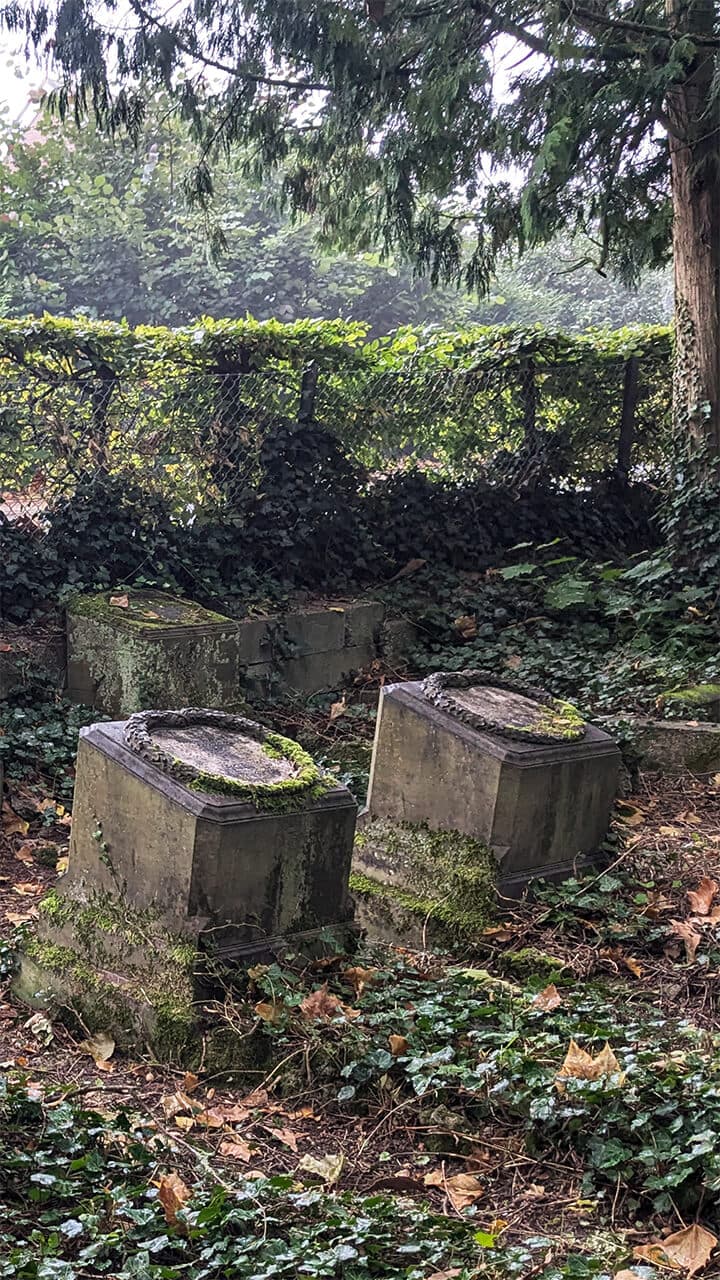
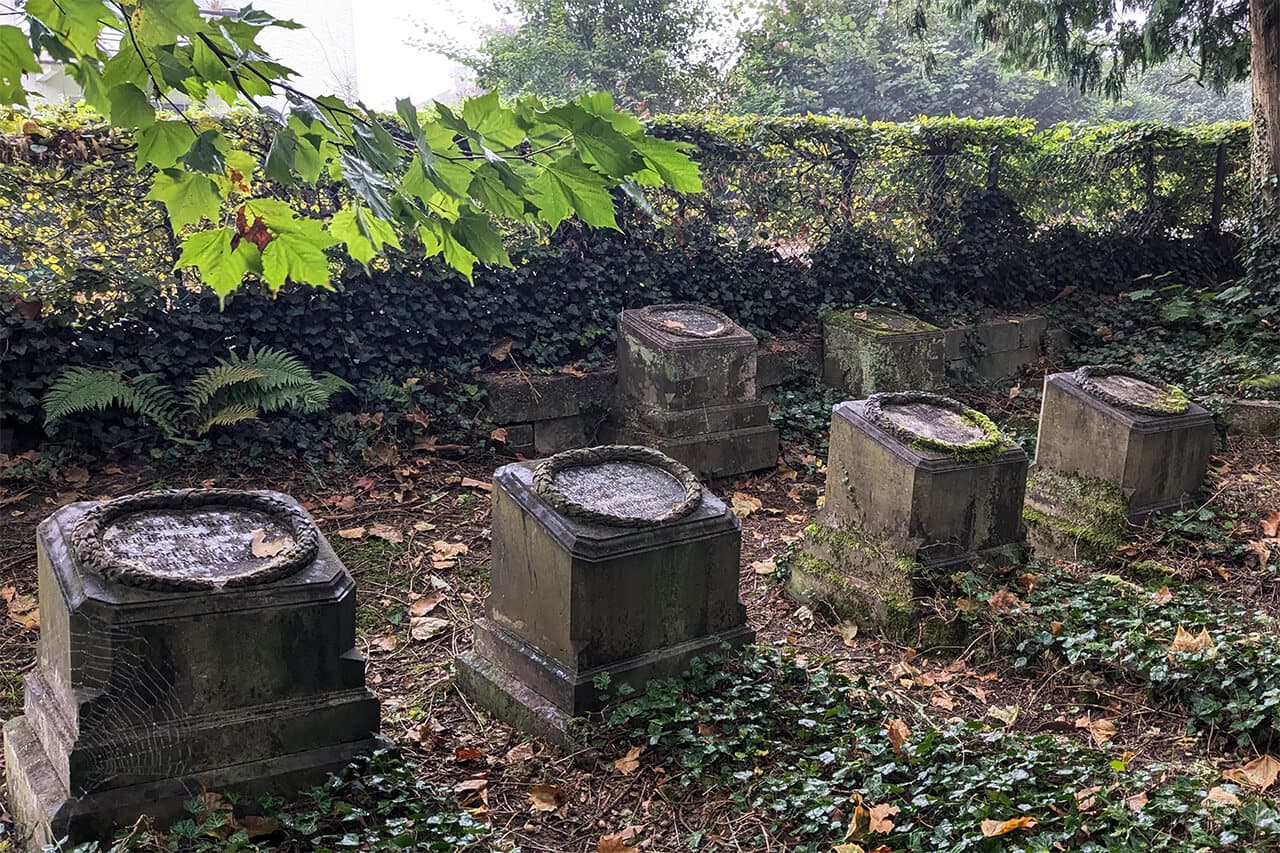
The Mansbach family is buried here.
How do their headstones show that they are a family? Which other families do the same?
The oldest headstones in the cemetery look like plaques. Take a look at the inscriptions! Are they in German, in Hebrew, or both? Are there differences between the front and back? Some gravestones are particularly striking! From what period do they date?
In death, all are equal. In this spirit, there were rules in communities to design all gravestones to be equally or similarly simple, regardless of the deceased’s social status. At the same time, families expressed their solidarity in this way.
Traditional Jewish gravestones and symbols remained predominant until around 1850. These are simple slabs with Hebrew inscriptions. After that, symbols and forms popular among Christians were gradually adopted in the Jewish cemetery as well. You can clearly see these gradual changes in the gravestones throughout the cemetery .</poi>