The Mansbach Family
Lübbecke
The Mansbach Family
Table of contents
Lübbecke
The Mansbach Family
Etliche jüdische Familien handelten mit Textilien, Manufakturwaren, betrieben eine Fleischerei, waren Viehhändler oder Handelsvertreter. Hier finden wir die Familiengrabstellen der Fleischerei Mansbach, des Textilgeschäfts Rosenberg, und der Fleischerei Hurwitz.
Schlachter Julius Mansbach hatte an der Scharrnstraße ursprünglich zwei Fachwerkhäuser gekauft und sie zu einem Wohn- und Geschäftshaus umbauen lassen. Die neubarocke Fassade zeugt bis heute vom Wohlstand und Bürgerstolz der Familie. Schon 1909 wurde die Schlachterei an die Familie Lülf verkauft. Nach dem 2. Weltkrieg hat die Familie Przytulla das Haus gekauft und dort die Fleischerei fortgeführt. Zu Julius Mansbachs Familie gehörte auch seine unverheiratete Tochter Rosalie; die 1860 geboren wurde. Rosalie Mansbach war unter anderem als Vorsitzende des Israelitischen Frauenvereins durch ihr soziales Engagement sehr geschätzt. 1939 zog sie aus Lübbecke fort nach Boppard am Rhein, wurde später nach Theresienstadt verschleppt und dort umgebracht.
Eine der ältesten in Lübbecke lebenden jüdischen Familien waren die Rosenbergs. Sie hatten in der Langen Straße ein Manufakturwarengeschäft. Max Nathan Rosenberg verkaufte sein Eigentum Ende der 1920er Jahre ganz legal an die Volksbank Lübbecke. Anschließend emigrierte die Familie in die USA.
Lübbecke
The Mansbach Family
Lübbecke
The Mansbach Family
Eine Anekdote von Max Lazarus, gelesen von Uwe Feldmann
Durch die Aufzeichnungen von Max Lazarus wissen wir viel über das Gemeindeleben. Jeder kannte jeden und man kümmerte sich unter einander. Über das Ehepaar Meier erfahren wir folgende Geschichte:
The Mansbach Family
Formen und Inschriften der Grabsteine
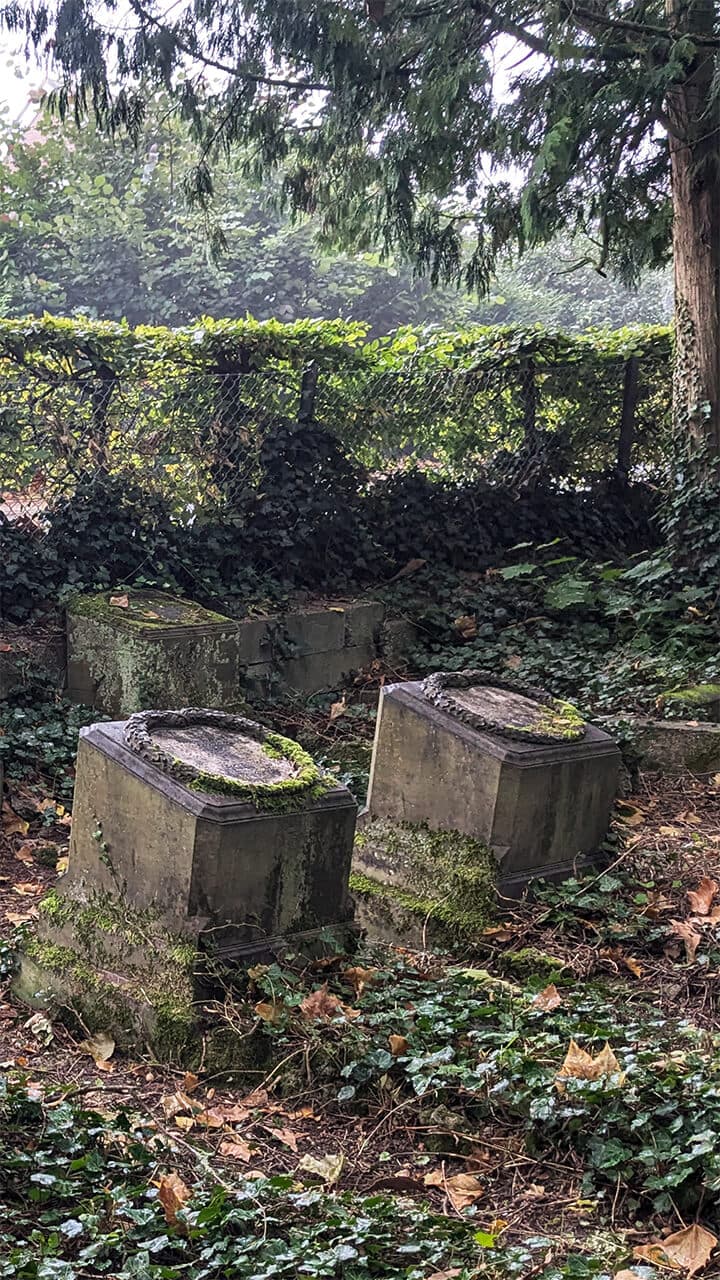
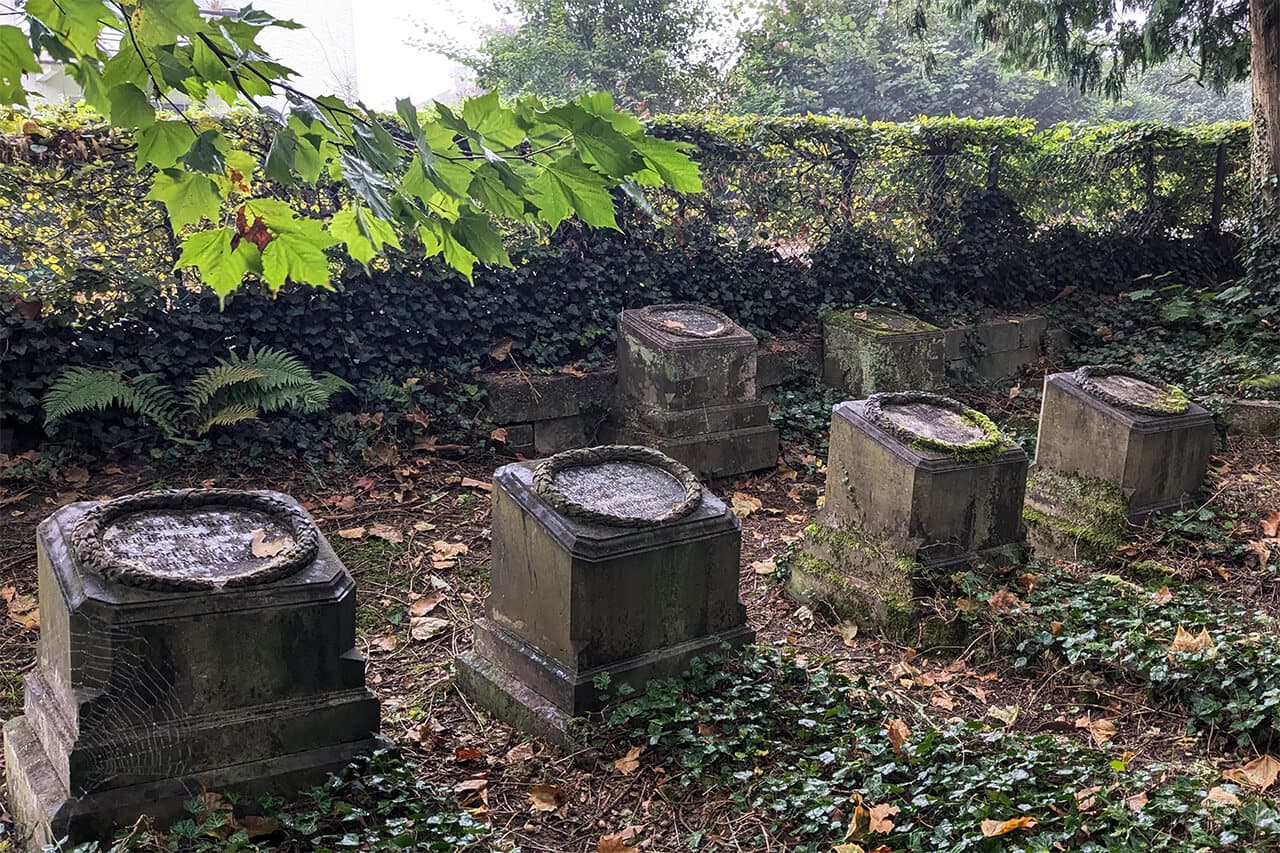
Hier ist Familie Mansbach begraben.
Wie zeigt sie durch ihre Grabsteine, dass sie eine Familie ist? Welche Familien machen das ebenso?
Die ältesten Grabsteine auf dem Friedhof sehen wie Tafeln aus. Schau dir die Inschriften an! Sind sie auf Deutsch, auf Hebräisch, beides gleichzeitig? Gibt es Unterschiede zwischen der Vorder- und Rückseite? Manche Grabsteine sind besonders auffällig! Aus welcher Zeit stammen sie?
Im Tode sind alle gleich. In diesem Sinn gab es Regeln in Gemeinden, alle Grabsteine gleich oder ähnlich schlicht zu gestalten, ungeachtet der gesellschaftlichen Stellung des Verstorbenen. Gleichzeitig drückten Familien so ihre Verbundenheit aus.
Etwa bis 1850 blieben die traditionellen jüdischen Grabsteine und Symbole vorherrschend. Es sind schlichte Tafeln mit hebräischer Inschrift. Danach wurden Zeichen und Formen, die bei den Christen beliebt waren, nach und nach auch auf dem Judenfriedhof übernommen. Die allmählichen Änderungen kannst du an den Grabsteinen auf dem gesamten Friedhof deutlich erkennen .