
The City Cemetery
Lübbecke
The City Cemetery
Table of contents
Lübbecke
The City Cemetery
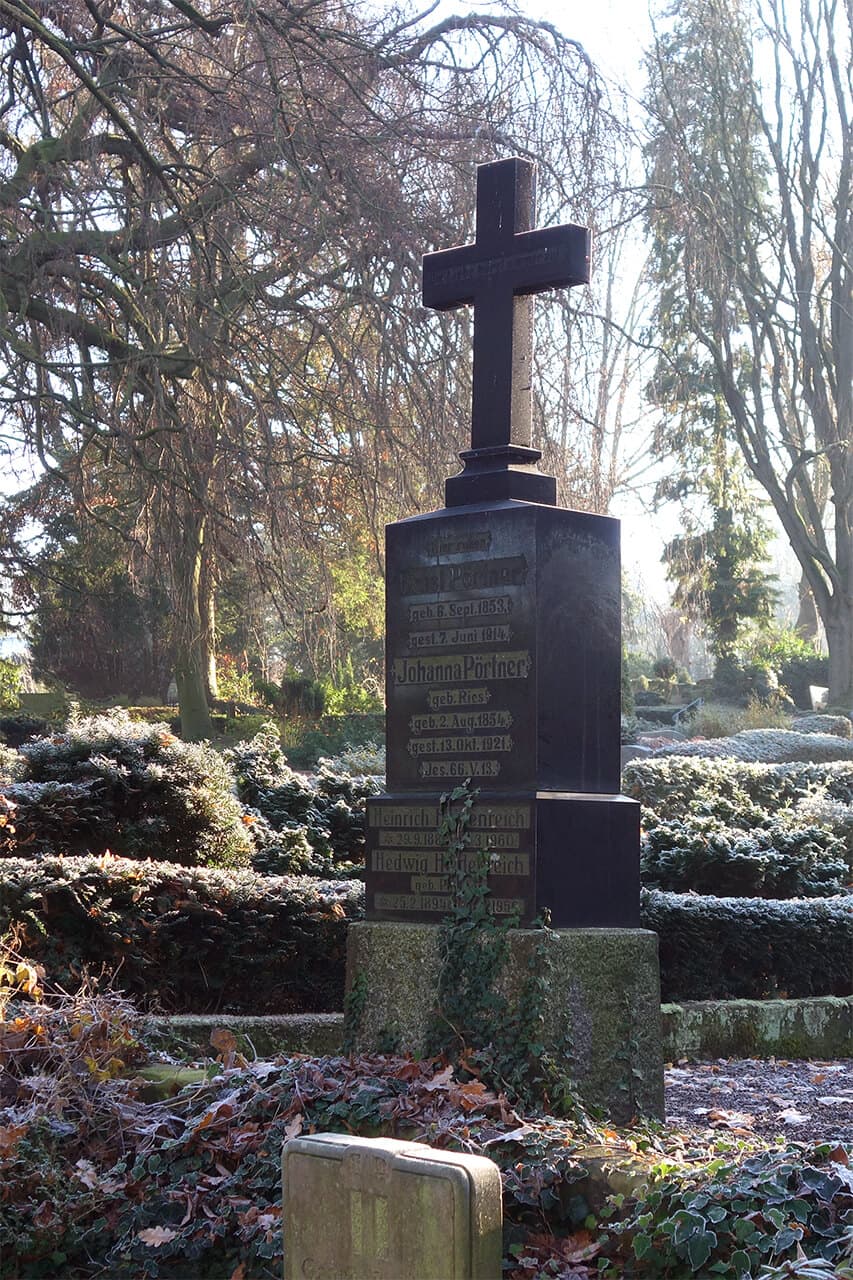
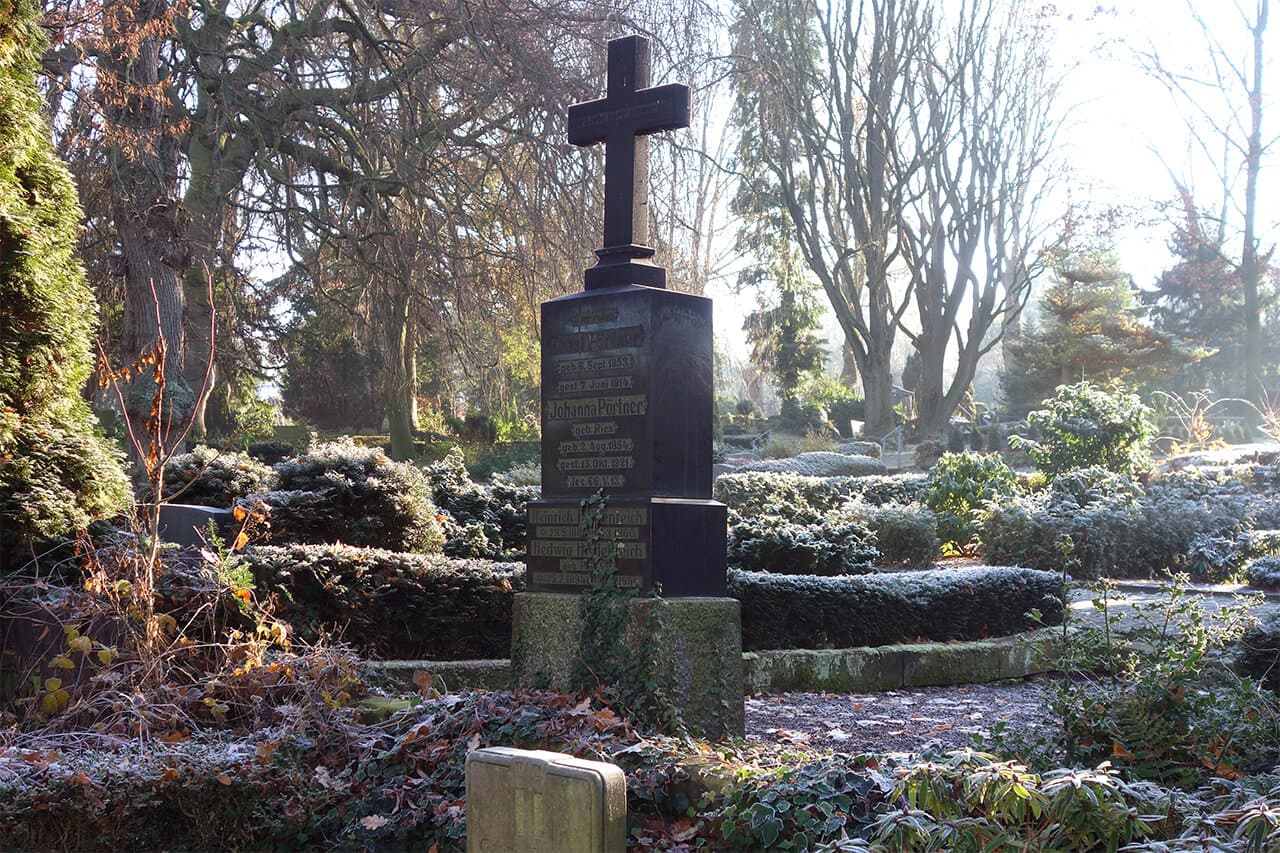
The cemetery was established in 1839. Adjacent to its northeastern side are two other cemeteries: the Oberbauerschafter Cemetery and the Jewish Cemetery.
Because the Lübbecke City Council was still the patron of the old cemetery at St. Andrew's Church in 1839, it had the legal authority to establish a municipal cemetery.
Burials have taken place around St. Andrew’s Church since time immemorial. Members of the nobility and high-ranking clergy had burial plots inside the church. For the salvation of their souls, it was important to the people to be close to God. In 1799, the Kingdom of Prussia ordered the city council to relocate the cemetery outside the city gates. Based on scientific findings and the threat of epidemics, the cemetery was no longer to be used there. This was because the citizens drew their drinking water from wells within the city limits. Nevertheless, the city council delayed moving the cemetery outside the city limits for 40 years. Ultimately, fear of cholera and other epidemics, along with pressure from the authorities, forced it to act.
On July 7, 1839, the new cemetery was dedicated with a ceremony. At that time, Lübbecke had 2,500 residents, including 30 Catholics and 100 Jews. Twenty-five years later, the first expansion was needed. Shortly before that, the Jewish cemetery had been incorporated into the municipal cemetery. The municipal cemetery was subsequently expanded several times, most recently in 1998.