Russian Germans
Russian Germans
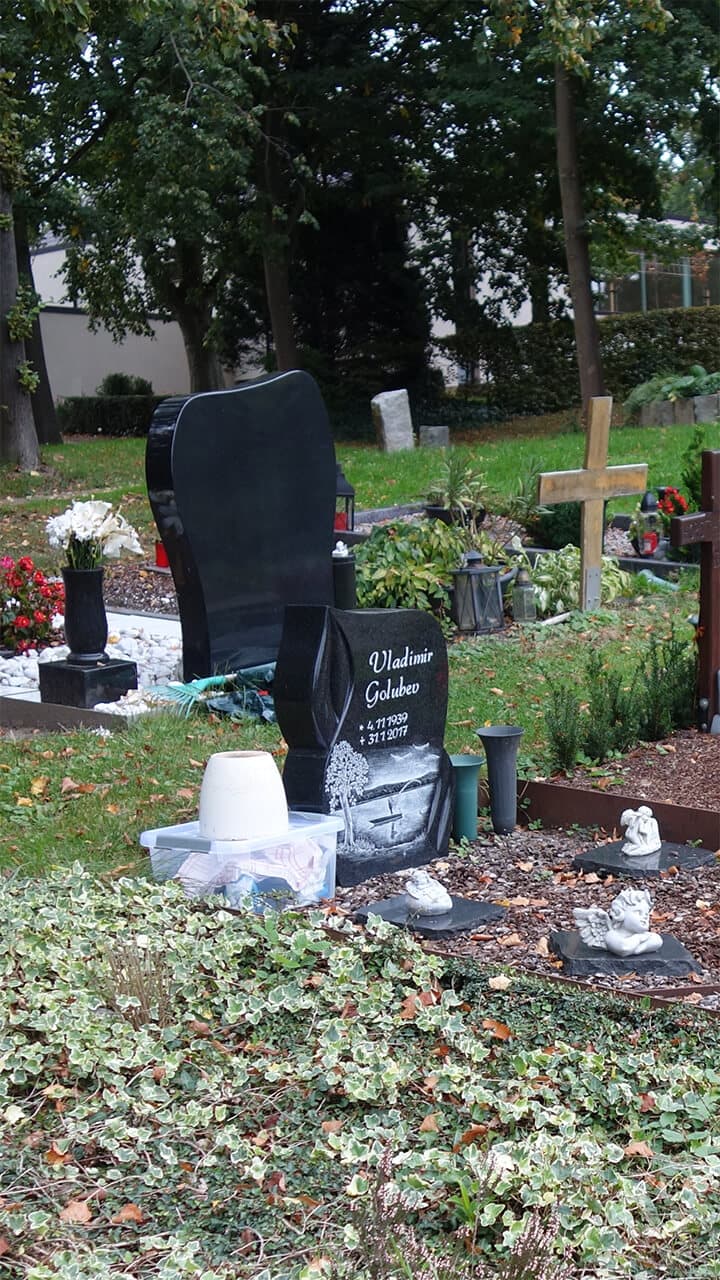
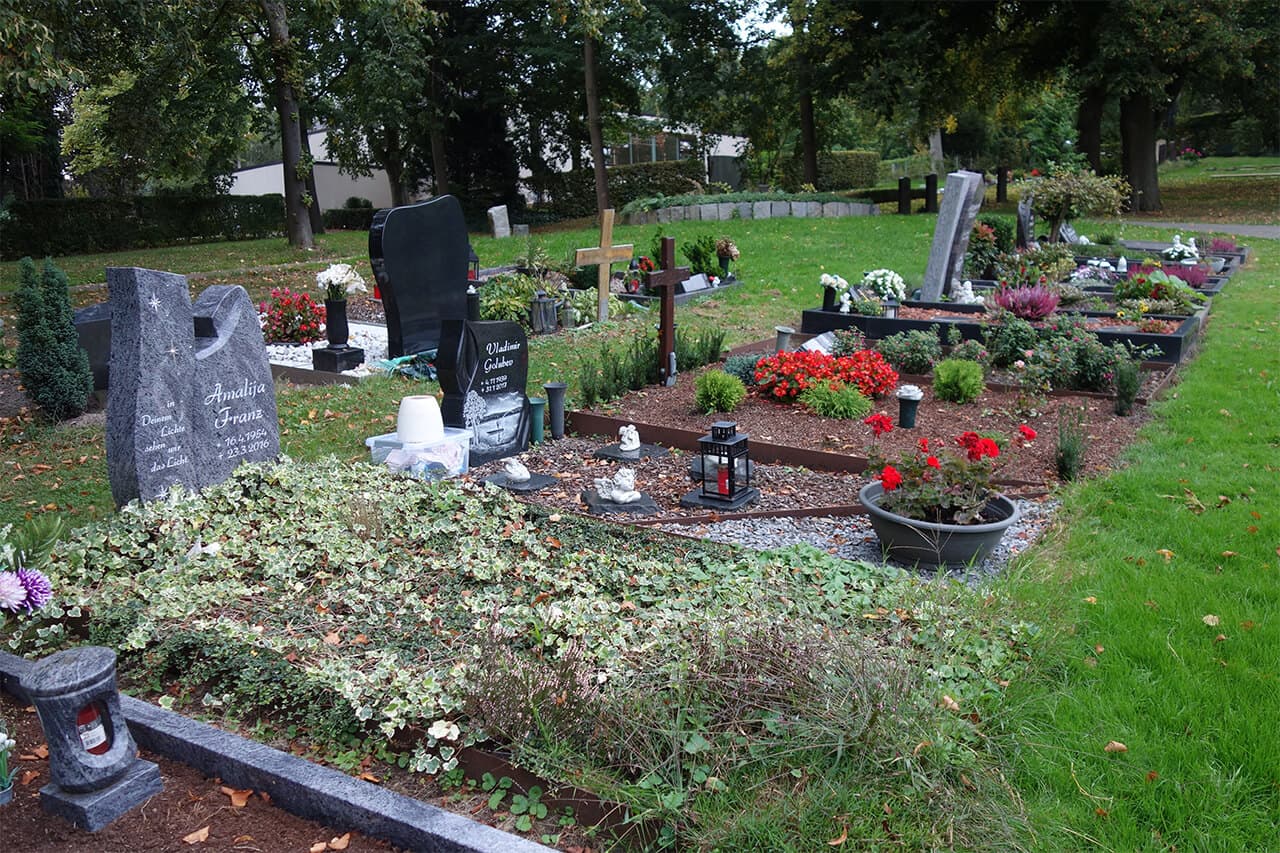
The names on the headstones reveal that this cemetery contains numerous graves of Russian German repatriates. It was important to these families to bury their deceased in “untouched” soil rather than in a previously occupied grave. This wish was fulfilled at the lawn cemetery and with the cemetery’s expansion in 1998.
The term “Russian Germans” refers to the descendants of German settlers who had settled in various regions of the Russian Empire since the second half of the 18th century. This term has only been used as a collective designation since the 20th century. Previously, the focus was on the denominational and regional differences among the Protestant, Catholic, and Mennonite colonists along the Volga, in the Black Sea region, in the Caucasus, and in other regions of the Russian Empire.
During World War I, the Russian Germans were persecuted by the Tsarist regime as “internal enemies” because of their German heritage. They were often dispossessed and resettled.
During World War II, starting in late August 1941, Russian Germans were deported from the Volga, the Crimea, the Caucasus, and southern Russia to Siberia. The Germans in the Black Sea region were initially spared deportation and came under German occupation. In 1943–44, they were resettled by the Nazi authorities to occupied Poland. From there, they fled to Germany toward the end of the war to escape the advancing Red Army.
It was not until the 1970s that numerous departures to the Federal Republic of Germany took place. Here, the Russian Germans were taken in by their relatives, as emigration during the Cold War was only possible as family reunification. The majority of Russian Germans were only able to emigrate to Germany in the wake of perestroika, beginning around 1987, and after the collapse of the Soviet Union.</poi>