Lübbecke
The Leeser Family
Table of contents
Lübbecke
The Leeser Family
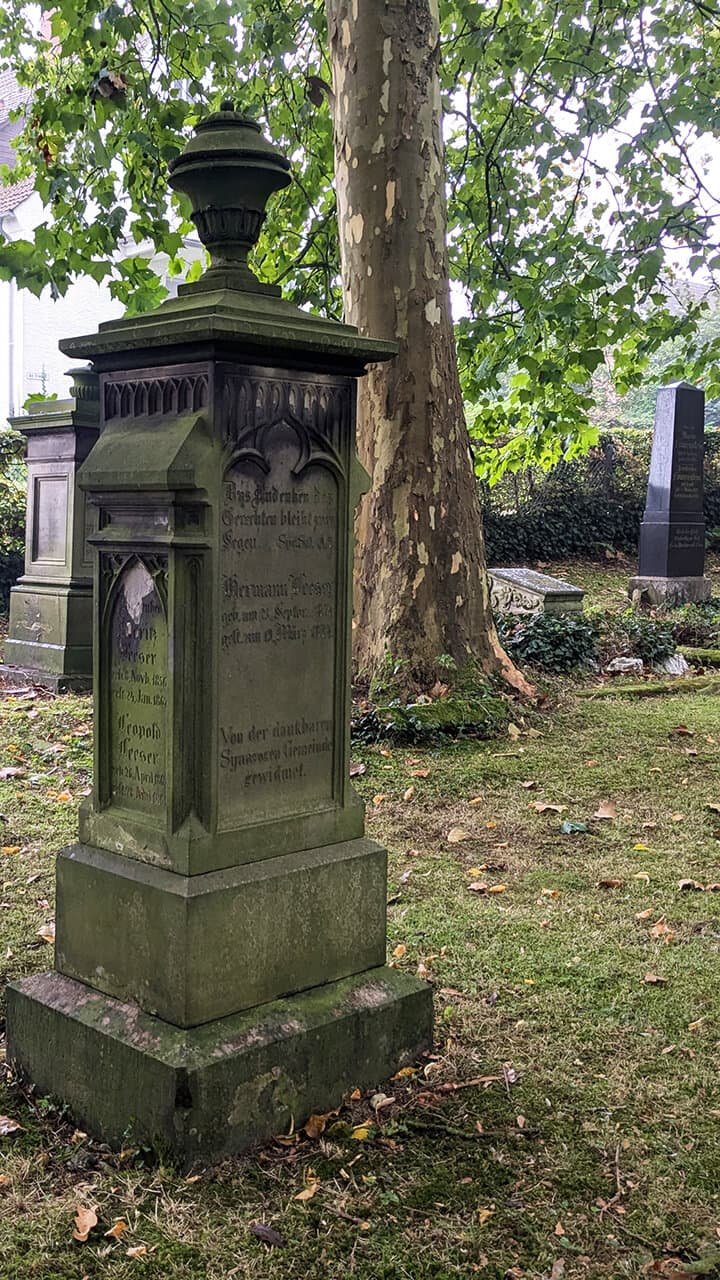
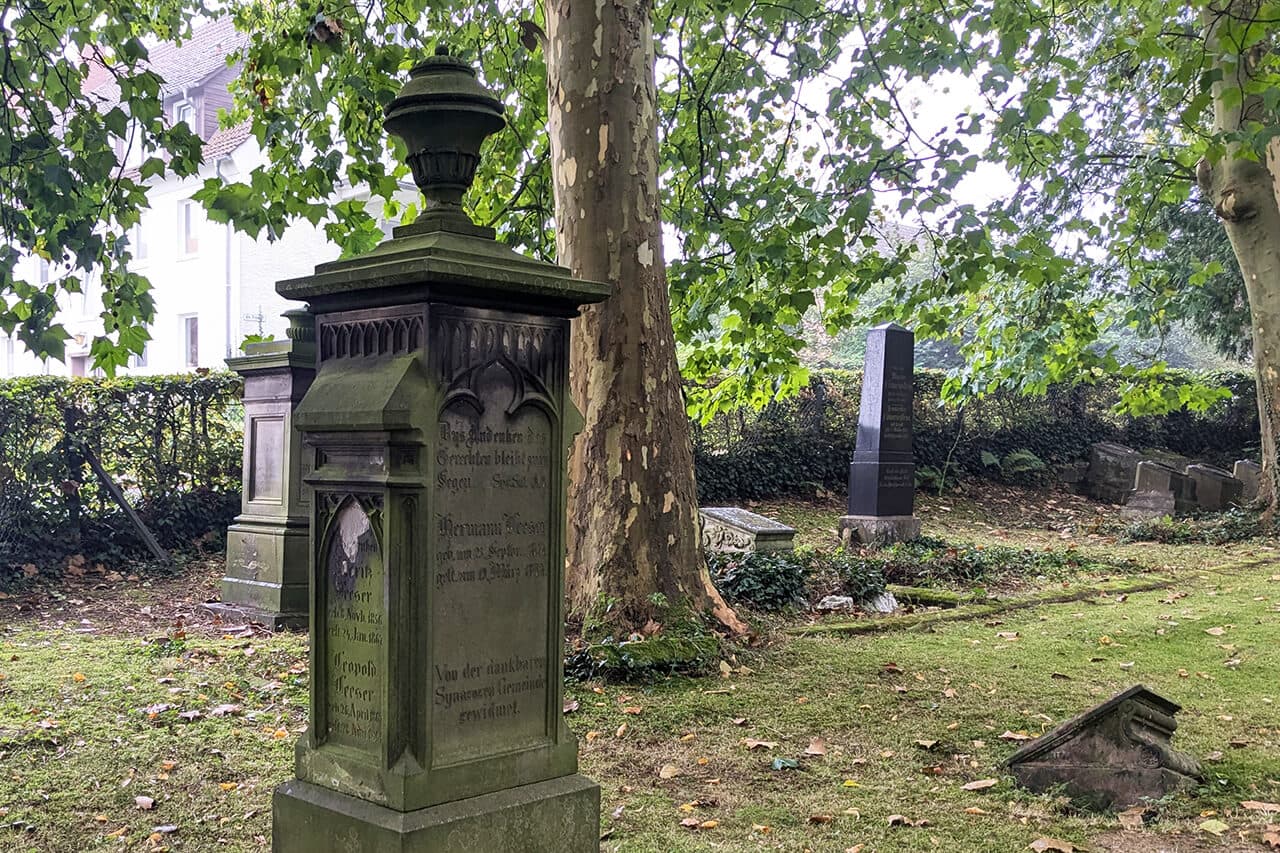
Heimann Leeser was a teacher who rendered outstanding service to the reform of worship and the congregation. This is attested to by the congregation’s dedication on this gravestone. The earliest evidence that Jews lived in Lübbecke is provided by a commemorative stone at the north portal of St. Andrew’s Church. It commemorates the church’s expansion in 1350 and reports on a pogrom against Jews. In the Middle Ages, Jewish residents had no opportunity to acquire civil rights in the cities and were severely restricted in their choice of occupation. If they had sufficient funds, they could purchase the status of a “protected Jew.” Jews were not permitted to carry weapons.
For religious services, the community met privately or in rented rooms. The children were taught Hebrew and the practice of their faith. By 1744 at the latest, a synagogue had been established in an outbuilding of a former burgher’s estate, though the community was permitted only to rent the rooms.
During the “French period” (1807 to 1813), Jews were granted legal equality with Christians, and the requirement to join a guild was abolished. In 1854, the community was able to purchase and expand the synagogue it had previously rented. The integration of the Jewish population into Christian society began. The Jewish community reformed its worship services and, among other things, introduced German into sermons, prayers, and hymns.
With the Nazis’ rise to power, a period of defamation, gradual disenfranchisement, persecution, and ultimately the murder of Jews began. By mid-1941, there were no longer any Jewish residents living in Lübbecke.
Lübbecke
The Leeser Family
Lübbecke
The Leeser Family
A report by Max Lazarus, read by Uwe Feldmann
Diagonally across the street stands the memorial to Max Löwenstein, a soldier who fell in World War I. His teacher, Max Lazarus, recalls:
The Leeser Family
First Names and Dates
The Leeser family had six children, three of whom died. You can find their names on the headstone. How old were they when they died? You’ll find many more children’s graves in this cemetery—pay attention to the dates! Back then, medicine wasn’t as effective against diseases as it is today. There were also times when food was scarce and people went hungry.
Biblical first names like Abraham or Sarah were popular. Some first names, however, are quite unusual, such as “Heimann” or “Heinemann,” “Herz” Weinberg, or “Täubchen” Ruben. Can you find their graves? Which of these many names are still common today?
Sophie Hecht was the first person buried in this cemetery; that was in 1863. Find her grave! How old did she get?</poi>