The Ruben Family
Lübbecke
The Ruben Family
Table of contents
Lübbecke
The Ruben Family
1846 gründete Nathan Ruben in Lübbecke eine Firma für Bekleidungswaren. Aus einem kleinen Unternehmen wuchs schnell ein Großunternehmen. 1880 wurde die Villa der Familie Ruben und das angrenzende Fabrikgebäude errichtet. Ende des 19. Jahrhunderts arbeiteten allein in Lübbecke etwa 300 Näherinnen als Heimarbeiterinnen für die Firma. Sie brachten ihre fertiggestellten Waren auf Handwagen nach Lübbecke. 50 Arbeiterinnen und 35 Mitarbeiter waren in der Fabrik selbst als Kontoristen tätig oder arbeiteten als Reisende, Lagerarbeiter oder Zuschneider. Damit war die Firma Ruben die größte jüdische Firma in Lübbecke, wenn nicht sogar die größte Firma in Lübbecke überhaupt. 1906 bestanden insgesamt sechs Fabriken.
Das Stammwerk in Lübbecke mit Zweigstellen in Minden, Bünde und Herford stellte Berufskleider und Arbeitergarderoben aller Art her. In Hamburg (1888) wurden Herrenkleidung, Lodenwaren und Hemden hergestellt. In der Hamburger Ölzeugfabrik (1904) gab es Gummimäntel, wasserdichtes Ölzeug und Lederbekleidung. In Berlin (1901) wurden Knabenanzüge genäht. Der Sitz in Mönchen-Gladbach (1907) fertigte Tropenanzüge und Exportkonfektion aller Art. Die Spezialfabrik in Manchester (1907) fertigte ebenfalls Tropenanzüge und Exportkonfektion sowie Hemden aller Art.
In der Pogromnacht 1939 wurde die Villa Ruben geplündert und verwüstet. Der zwangsweise Verkauf und „Arisierung“ der Ruben'schen Besitzung folgte. Die Familie Ruben konnte nach England emigrieren.
Lübbecke
The Ruben Family
Lübbecke
The Ruben Family
Eine Erinnerung von Max Lazarus, gelesen von Uwe Feldmann
Moritz Lazarus war über 40 Jahre lang bei Firma Ruben beschäftigt. Sein Bruder Max Lazarus erinnert sich:
Hier sehen sie ein 360° Panorama der Umgebung.
The Ruben Family
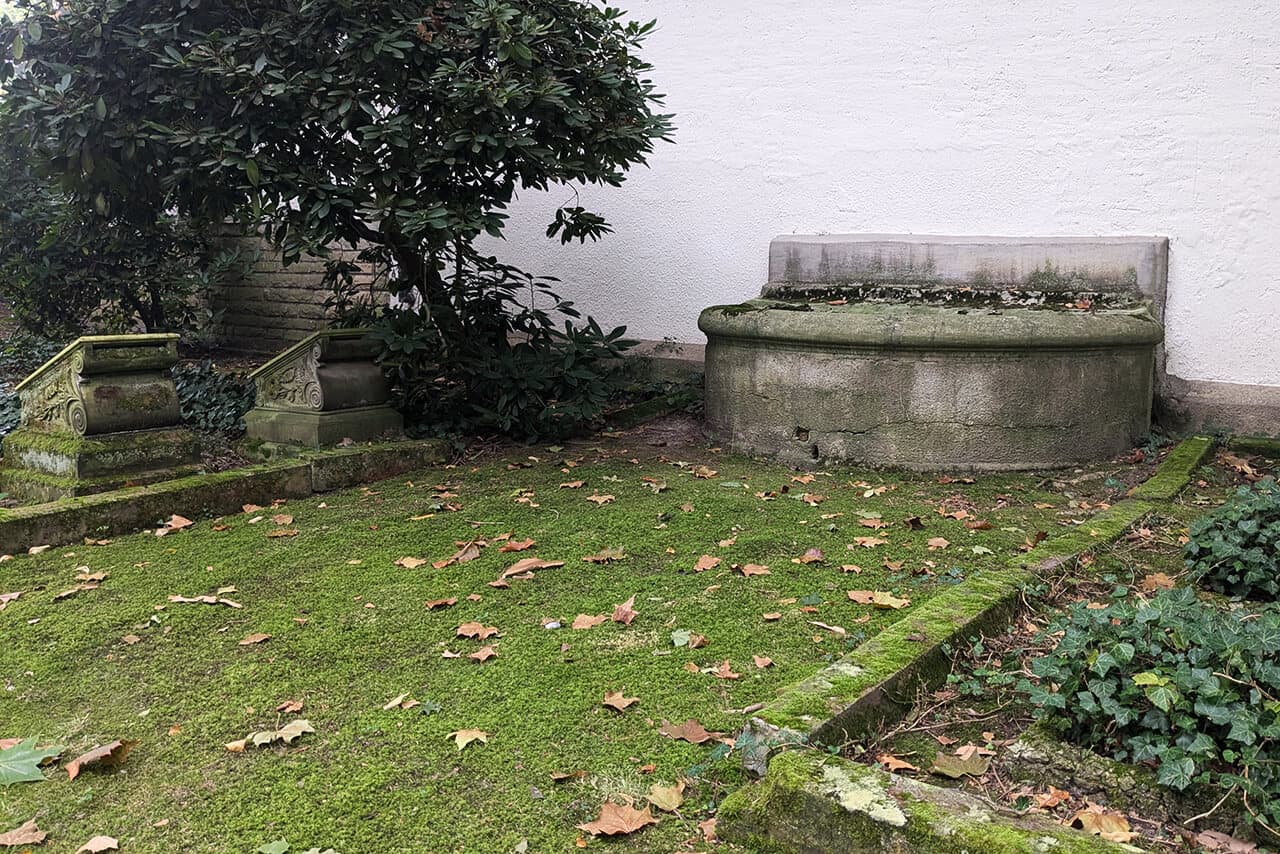
Wasserbecken und Totengedenken
Das Wasserbecken wird nicht mehr benutzt und ist leer. Wozu diente es wohl? Ist dir aufgefallen, dass auf den Grabsteinen oft kleine Steine abgelegt worden sind? Kennst du einen besonderen Tag im Jahr, an dem man zum Friedhof geht und an die Toten denkt?
Nach jüdischer Vorstellung ist ein Toter unrein. Wer sich mit ihnen in einem festgelegten Raum – z. B. dem Friedhof – befindet und beschäftigt, wird verunreinigt und soll sich säubern. Beim Verlassen des Friedhofs ist es daher üblich, sich die Hände zu waschen. Aus diesem Becken wurde das Wasser für die Grabpflege geschöpft.
Wenn Juden die Gräber ihrer Verstorbenen auf dem Friedhof besuchen, legen sie oft einen kleinen Stein zum Zeichen ihres Gedenkens auf den Grabstein. Vielleicht möchtest du auch einen Stein ablegen? Am Jahrestag des Todes besuchen die Verwandten das Grab; entzünden ein Licht und sprechen das Kaddisch. Es ist ein Gebet, mit dem Jüdinnen und Juden Gott loben. Es wird im Gottesdienst oder am Grab gesprochen.