Lübbecke
The Hecht Family
Table of contents
Lübbecke
The Hecht Family
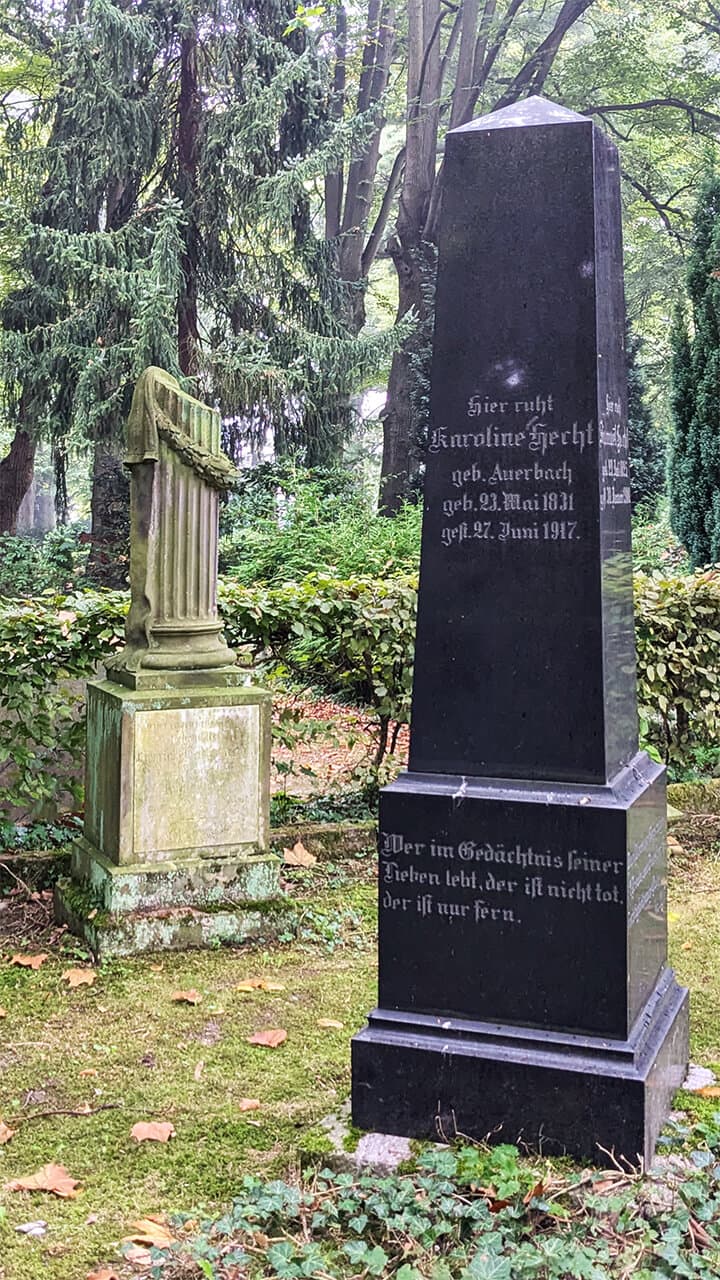
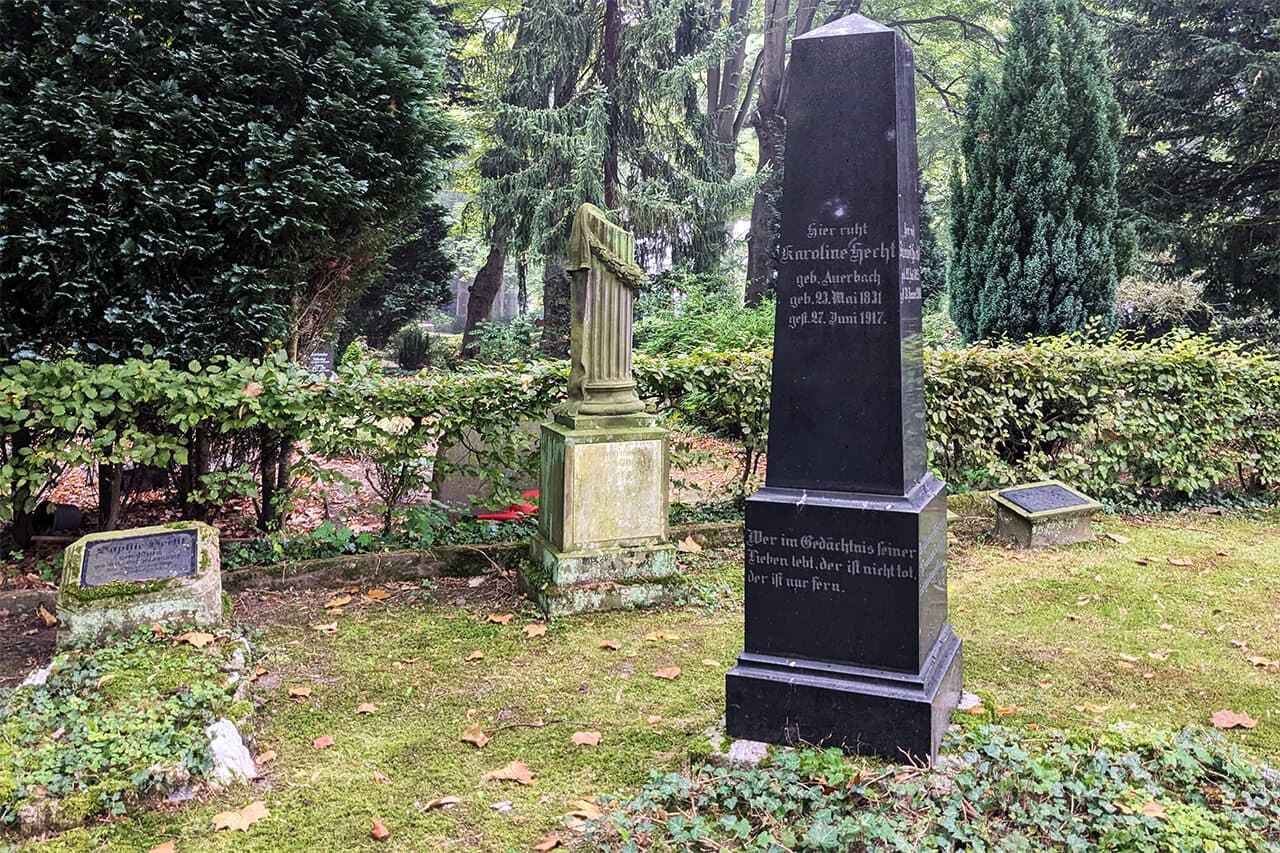
This family plot contains the cemetery’s oldest grave. Sophie Hecht died in 1863. Her funeral marked the opening of the new Jewish cemetery.
Starting in 1807, the Hecht company first operated a rope-making business, then traded in linen and cotton goods. Eventually, the focus shifted to workwear—the well-known “Blaumänner”—and linens. The indigo-blue fabrics required for this were dyed at the Vogeler company on Geistwall in Lübbecke. During the Nazi era, the Hecht family was forced to sell their property. Their successors were the merchant Ernst Kaufmann, who had previously served as an authorized signatory at the company for many years, and the firm J.H. Sweering & Co. (Ibbenbüren). After the war, the legal relationships were clarified, and following the settlement of compensation arrangements, the business continued as “Lübbecker Kleiderfabrik Kaufmann und Co. KG.” Several members of the Hecht family fell victim to Nazi terror.
Lübbecke
The Hecht Family
Lübbecke
The Hecht Family
A report by Max Lazarus, read by Uwe Feldmann
Near the Hecht family grave lies the grave of Jakob Schapiro, a Jewish prisoner of war. Max Lazarus tells his story:
The Hecht Family
Inscriptions and Symbols
You’ll find these Hebrew characters on every gravestone; they’re read from left to right. פ"נ Here lies.
This is followed by the name of the deceased, their age, date of death, and finally a blessing: תנצב"ה May his/her soul be bound up in the bond of life. The text in between contains words of praise for the deceased.
On gravestones, you’ll find symbols as well as writing. Take a look around! Which symbols catch your eye? What might they mean? Can you find the butterfly?
With its circular shape and no beginning or end, the wreath is a symbol of eternity and resurrection. Stars represent light and life. A column is a symbol of strength and permanence, representing the connection between God and humanity. The broken column signifies a life cut short. The butterfly is a symbol of transformation: the caterpillar represents life as a human, the chrysalis represents death, and the butterfly represents resurrection in paradise.</poi>