
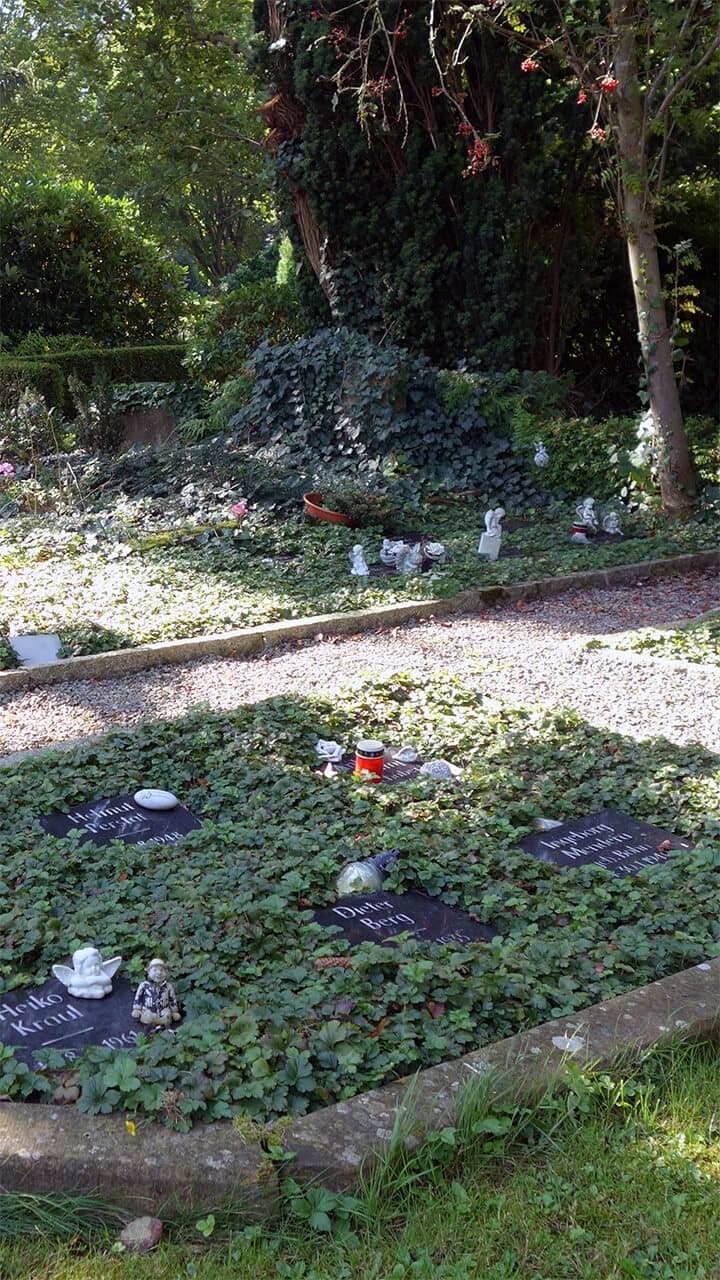
1862 - Cremations
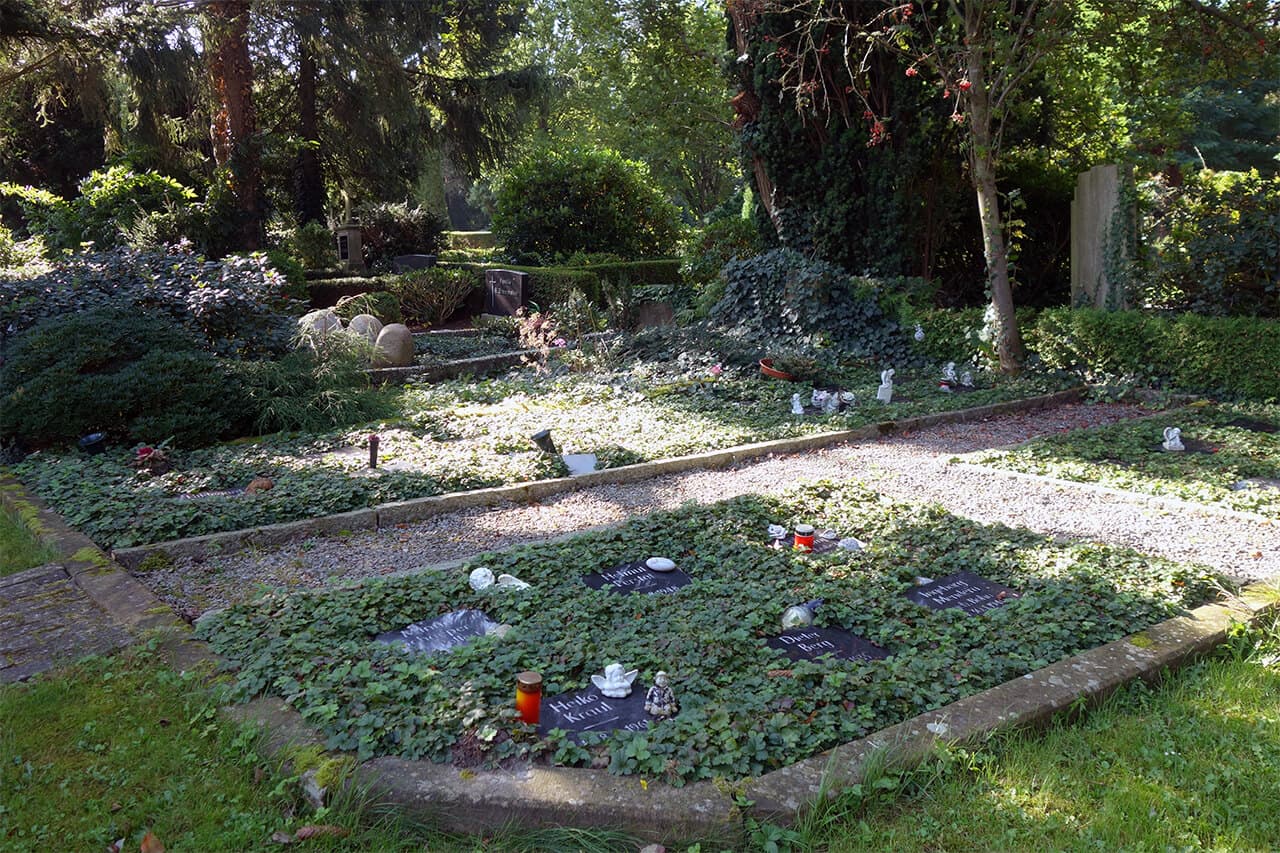
1862 - Cremations
Feuerbestattung
Dieser Friedhofsteil ist 1862 angefügt worden. Es war die Zeit des industriellen Aufbruchs und des Zustroms von Handwerkern und Arbeitern in die Stadt. Heute sind ehemalige Familiengrabstellen mit Urnengemeinschaftsgräbern belegt.
Die Feuerbestattung hat in unserer Zeit die Erdbestattung überholt. Die Asche wird in eine Urne gefüllt und beigesetzt oder verstreut.
Seit 1934 gilt das Feuerbestattungsgesetz. Es stellte erstmals Feuer- und Erdbestattung gleich. Vorgeschrieben ist eine ärztliche Leichenbeschau vor der Einäscherung. Die Beisetzung der Urne ist nur auf dem Friedhof erlaubt. Diesen Friedhofszwang hat inzwischen das nordrhein-westfälische Bestattungsgesetz gelockert. Es erlaubt die Urnenbeisetzung in "Friedwäldern" oder auch das Verstreuen der Asche – aber nur mit behördlicher Genehmigung.
1878 erlaubte Thüringens Landesfürst Ernst II. den Bau des ersten deutschen Krematoriums in Gotha. Es folgten Heidelberg, Hamburg, das Land Hessen - zuletzt erst Bayern und Preußen.
Am 15. Mai 1934 erließen die Nazis das erste deutsche Feuerbestattungsgesetz. Aber damals befürworteten nur knapp zehn Prozent der Deutschen die Feuerbestattung. Das hing mit dem strengen Einfluss der Kirche zusammen: Von der Christianisierung bis in die Neuzeit glaubte man an eine körperliche Auferstehung. Feuerbestattungen waren heidnisch und verboten. Im Mittelalter wurden Verbrecher mit dem Feuertod bestraft, damit sie keine Chance zur Wiederauferstehung hatten. Die katholische Kirche erneuerte das Verbot noch 1886.
Die Urne als Schmuckgefäß auf Grabsteinen kam Ende des 19. Jahrhunderts in Mode. Sie galt als Symbol für Aufklärung, Fortschrittlichkeit und Hygiene. Eine Feuerbestattung war damit nicht gemeint.