1928 - The Cemetery Chapel
Cemetery Chapel
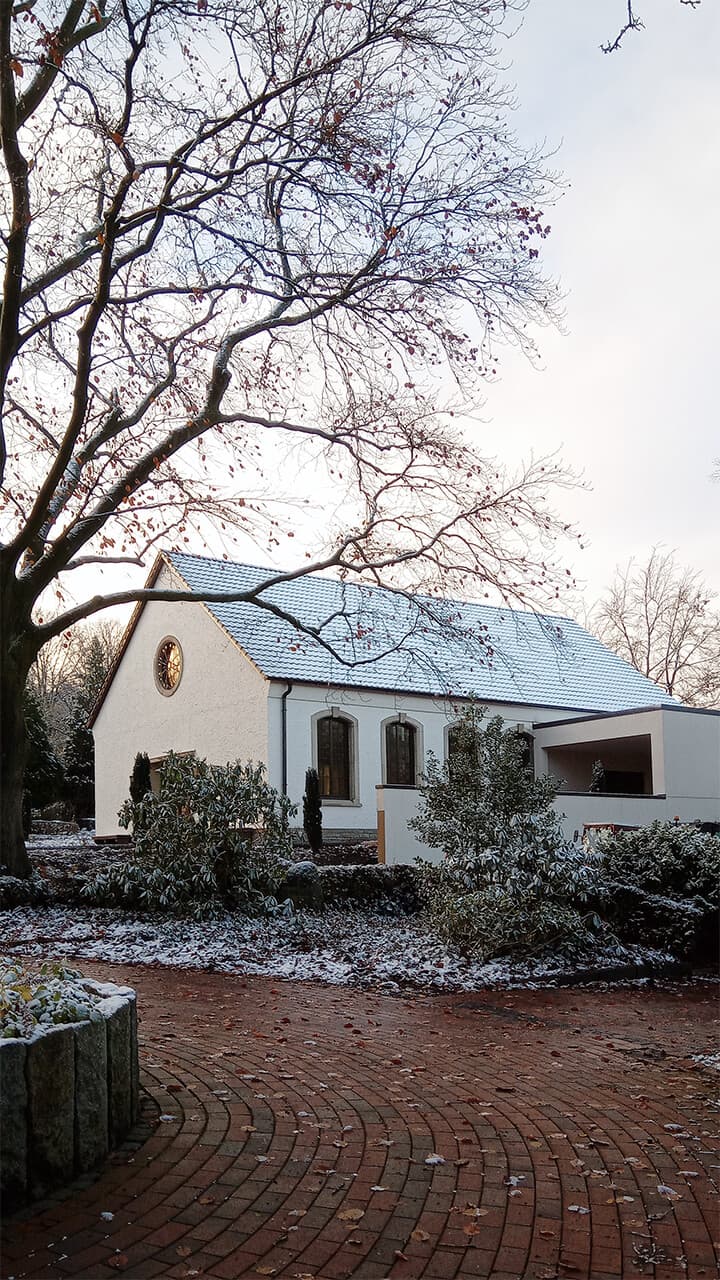
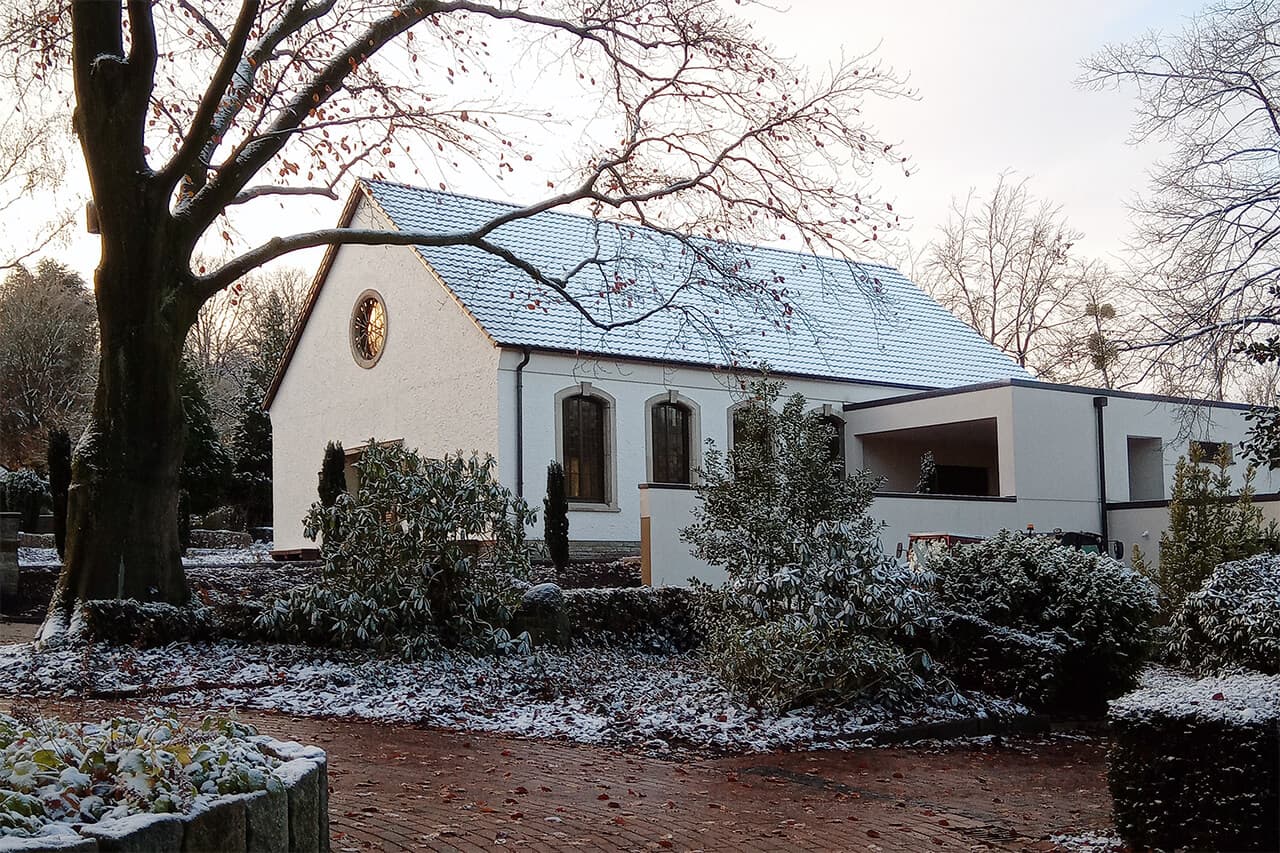
Plans for the cemetery chapel were drawn up before the start of World War II, but construction did not begin until after the war ended. The chapel was designed by Lübbecke-based architect Heinz Bünemann. It was completed in 1950 and has been used for funeral services ever since. In 1964, it was expanded to include six chambers for the laying out of the deceased. In 2023, further renovations and modernization took place. The cemetery chapel is open to all denominations as well as those without religious affiliation. When a large influx of Germans from Russia began in the late 1980s, the city made the chapel available for religious services.
Until the late 1940s, it was customary to lay out the deceased in their homes or in the hospital morgue. From there, a funeral procession with a hearse would proceed to the cemetery for burial. The horse-drawn hearse was specially decorated: the horses wore black capes and black harnesses adorned with black feathers at the head. The carriage itself, with its canopy, carvings, and ornaments, was also kept in black. Later, the deceased were driven to the cemetery at walking pace in a special motorized hearse.</poi>
1928 - The Cemetery Chapel
1928 - IMPRESSIONS
</poi>
Here you can see a 360° panorama of the surrounding area.