1913 - Crypts & Chamber Tombs
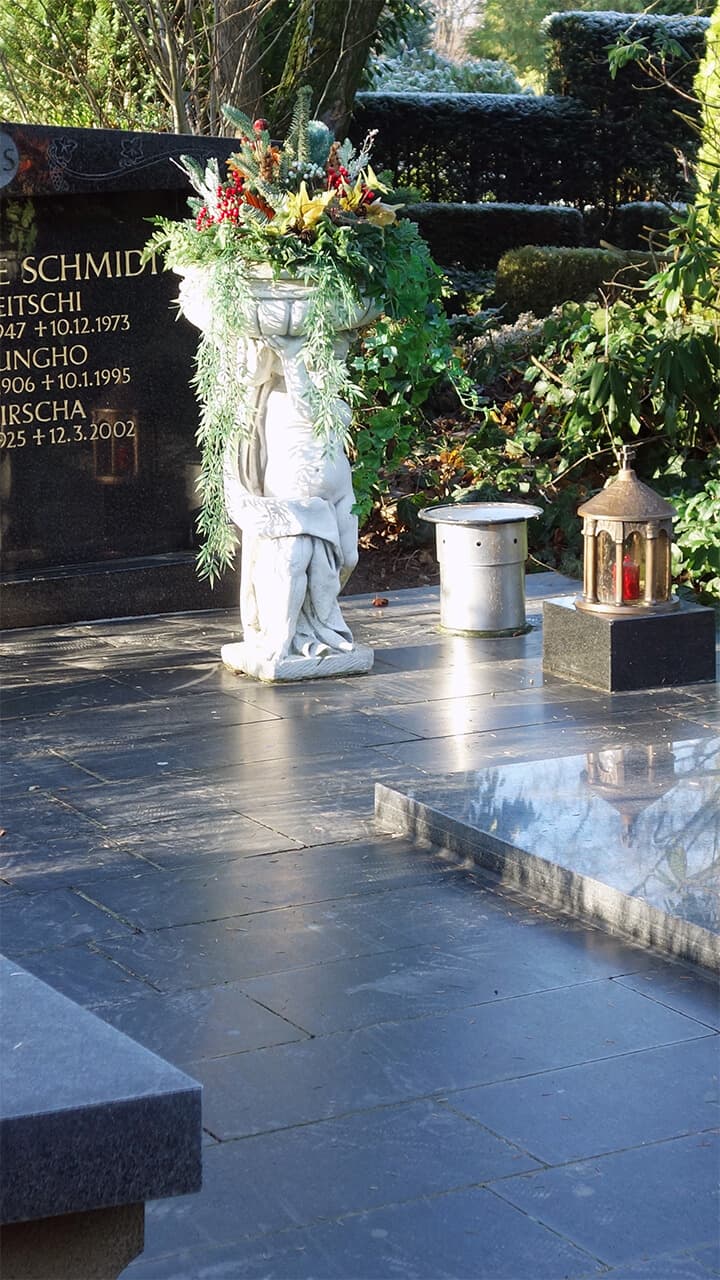
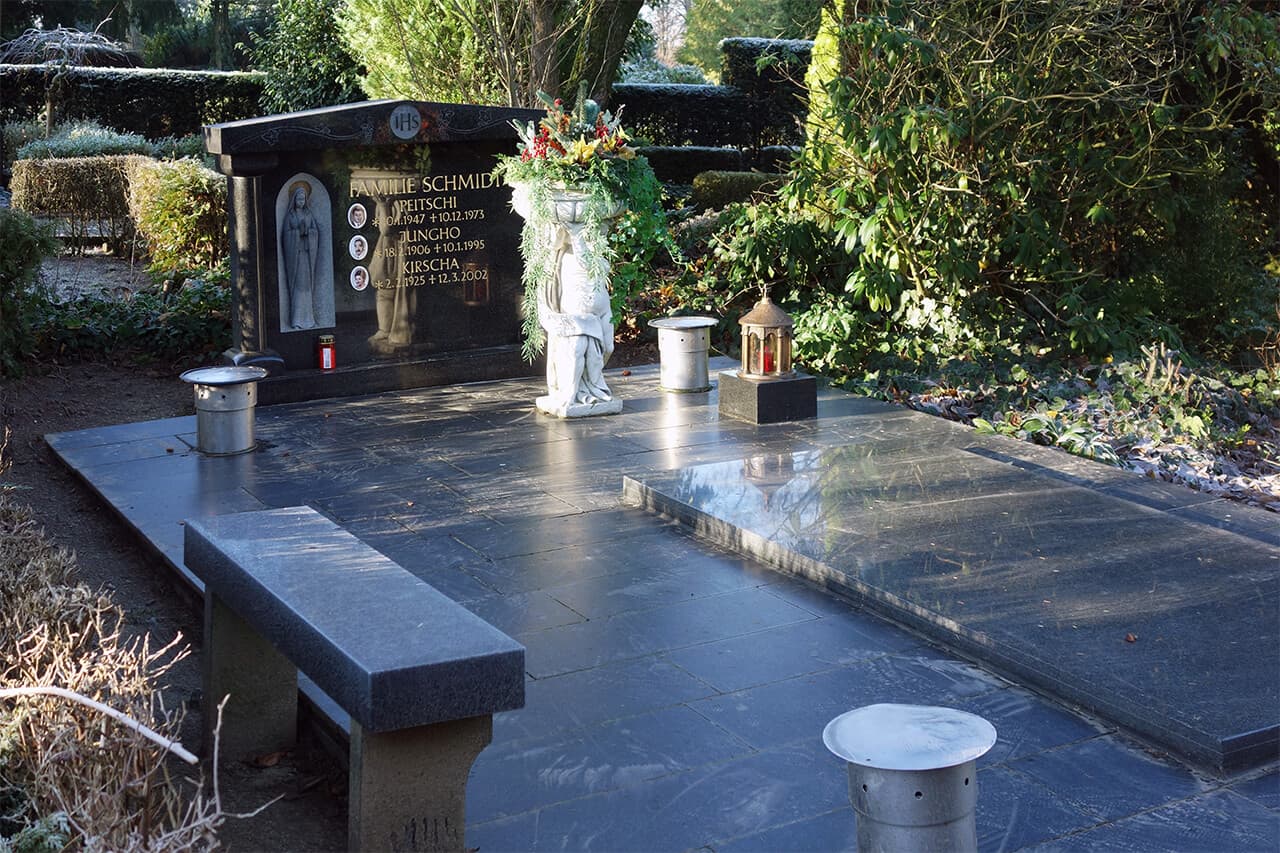
Chamber Tomb or Crypt
In the section of the cemetery dating from 1913, we find several chamber tombs or crypts. They are easily recognizable by their marble or metal cover slabs and ventilation shafts. It is not only the Sinti and Roma who use chamber tombs or crypts; the Blase cigar manufacturers from Lübbecke also had themselves and their family members buried in crypts. A chamber tomb or crypt is a room in which coffins and urns are interred. In cemeteries, the burial site is excavated and walled into a room. In monasteries or churches, a crypt is a separate room, usually in the basement. For burial in a crypt, the deceased must be placed in an airtight coffin. This is a metal coffin that is hermetically sealed before burial. Coffins for crypts can consist of one or two parts. If there are two parts, the inner part is a metal coffin. The outer coffin can then also be a wooden coffin; in churches, it is usually made of stone. In a crypt, the coffin or urn is not covered with soil. They remain surrounded by air where they were placed. Since the coffins are made of metal and sealed airtight, they remain unchanged for decades.</poi>
1913 - Crypts & Chamber Tombs
1913 - IMPRESSIONS
</poi>
Here you can see a 360° panorama of the surrounding area.